
How Many Days in Rome? A Complete Guide to Planning the Perfect Trip
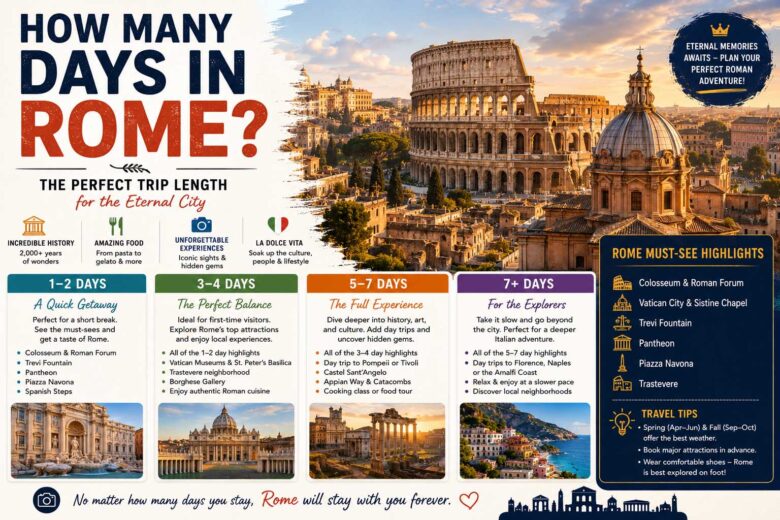
If you’re wondering how many days in Rome is enough, the short answer is 3 to 4 days. That gives you enough time to visit the city’s iconic landmarks, experience authentic Roman food, stroll through charming neighborhoods, and enjoy the city’s atmosphere without feeling rushed.
That said, the perfect trip length depends on your travel style. Some visitors stop for two days while touring Italy, while others happily spend a full week discovering hidden piazzas, museums, and local restaurants. This guide will help you decide how many days do you need in Rome based on your interests, budget, and travel pace.
How Many Days in Rome Is Ideal?
For most travelers, here’s what works best:
| Trip Length | Best For | What You Can See |
|---|---|---|
| 1 Day | Cruise stop or quick visit | Major landmarks only |
| 2 Days | Weekend travelers | Top attractions with limited museums |
| 3 Days | First-time visitors | Complete highlights with relaxed sightseeing |
| 4 Days | Most travelers | Highlights plus neighborhoods and local experiences |
| 5–7 Days | Slow travel lovers | Museums, day trips, food tours, hidden gems |
Three days remains the sweet spot because it allows enough time to experience Rome beyond simply checking famous attractions off a list.
If you’re planning a longer Italian vacation, pairing Rome with Florence, Venice, or the Amalfi Coast works especially well.
How Many Days to Spend in Rome for Different Travel Styles
First-Time Visitors
Three full days provide an excellent introduction.
You’ll comfortably visit:
- Colosseum
- Roman Forum
- Palatine Hill
- Vatican Museums
- St. Peter’s Basilica
- Trevi Fountain
- Pantheon
- Piazza Navona
- Spanish Steps
You’ll also have time to enjoy long Italian dinners instead of rushing between attractions.
History Lovers
History enthusiasts can easily spend five or six days exploring Rome.
Besides the famous sites, you’ll have time for:
- Capitoline Museums
- Baths of Caracalla
- Appian Way
- Castel Sant’Angelo
- Lesser-known archaeological sites
Families
Families often enjoy four days because children benefit from a slower schedule with breaks for gelato, parks, and piazza visits.
Food Lovers
If your goal is eating your way across Rome, four or five days offers plenty of opportunities to explore neighborhood trattorias, food markets, wine bars, and cooking classes.
A Suggested 3-Day Rome Itinerary
Day 1: Ancient Rome
Start with Rome’s most famous landmarks.
Visit:
- Colosseum
- Roman Forum
- Palatine Hill
After lunch, wander through the Monti neighborhood before finishing your evening with dinner near Piazza Venezia.
Day 2: Vatican City
Dedicate most of the day to:
- Vatican Museums
- Sistine Chapel
- St. Peter’s Basilica
- St. Peter’s Square
If energy allows, cross the Tiber River for dinner in Trastevere.
Day 3: Rome’s Historic Center
Spend your final day exploring:
- Trevi Fountain
- Spanish Steps
- Pantheon
- Piazza Navona
- Campo de’ Fiori
Leave time for shopping, espresso stops, and people-watching in beautiful piazzas.
Many travelers planning a European vacation also compare itineraries like how many days in paris, since both cities deserve at least three days to appreciate their top attractions.
Is Two Days in Rome Enough?
Yes—but only for the highlights.
You’ll need to prioritize carefully and book tickets in advance.
A two-day itinerary usually includes:
- Colosseum
- Roman Forum
- Trevi Fountain
- Pantheon
- Vatican Museums
- St. Peter’s Basilica
You’ll likely skip smaller museums and neighborhood exploration.
Is Five Days Too Long?
Not at all.
Five days lets you experience Rome more like a local.
You can:
- Explore Trastevere slowly
- Visit Borghese Gallery
- Relax in Villa Borghese Gardens
- Enjoy long dinners
- Take a food tour
- Discover neighborhood markets
- Visit less crowded churches
This pace feels far less hectic than trying to see everything in just two days.
Best Time to Visit Rome
Weather plays a big role in how enjoyable your trip will be.
Spring and fall are generally considered the best seasons thanks to comfortable temperatures and pleasant sightseeing conditions.
If you’re planning a broader Italian vacation, our guide on the best time to go to italy can help you choose the ideal season for the entire country.
Spring (March to May)
Pros:
- Mild weather
- Flowers blooming
- Comfortable walking conditions
Cons:
- Easter crowds
- Increasing hotel prices
Summer (June to August)
Pros:
- Long daylight hours
- Festivals
- Outdoor dining
Cons:
- High temperatures
- Crowded attractions
- Peak accommodation prices
If visiting during summer, start sightseeing early in the morning.
Fall (September to November)
Many experienced travelers consider autumn the perfect season.
Expect:
- Pleasant temperatures
- Smaller crowds than summer
- Beautiful evening walks
Winter (December to February)
Winter offers:
- Lower hotel rates
- Shorter attraction lines
- Festive Christmas decorations
Bring a light jacket and prepare for occasional rain.
Getting Around Rome
Rome is surprisingly walkable.
Most major attractions sit within the historic center.
Other transportation options include:
- Metro
- Public buses
- Trams
- Taxis
- Ride-sharing services
Walking remains the best way to discover hidden churches, fountains, and charming side streets.
Comfortable shoes are essential because you’ll likely walk several miles each day.
Budgeting for Your Trip
Rome works for nearly every travel budget.
Here’s a rough daily estimate per person.
| Budget Style | Daily Cost |
|---|---|
| Budget | $90–$150 |
| Mid-range | $180–$300 |
| Luxury | $400+ |
Costs typically include:
- Hotel
- Meals
- Transportation
- Attraction tickets
Booking accommodations and popular attractions well in advance often saves money.
Where to Stay
Choosing the right neighborhood makes sightseeing much easier.
Historic Center
Best for:
- First-time visitors
- Walking everywhere
- Easy access to landmarks
Trastevere
Perfect if you enjoy:
- Nightlife
- Local restaurants
- Charming streets
Monti
A favorite among travelers looking for boutique hotels, independent cafés, and easy access to Ancient Rome.
Prati
Ideal for:
- Vatican visits
- Quieter evenings
- Families
Local Foods You Should Try
Rome’s food scene is one of Italy’s biggest highlights.
Don’t miss:
- Carbonara
- Cacio e Pepe
- Amatriciana
- Supplì
- Roman-style pizza
- Artichokes (seasonal)
- Gelato
- Espresso
Skip restaurants with aggressive tourist menus and instead look for places filled with locals.
Common Mistakes Travelers Make
Even experienced travelers can make simple planning mistakes.
Avoid these common ones:
- Underestimating walking distances
- Not booking Colosseum tickets early
- Visiting the Vatican without reservations
- Wearing uncomfortable shoes
- Packing an overloaded itinerary
- Ignoring dress codes for churches
- Eating near major tourist attractions without checking reviews
Leaving some free time often leads to the most memorable discoveries.
Can You Take a Day Trip From Rome?
Yes.
If you’re staying five or more days, consider visiting:
- Tivoli
- Ostia Antica
- Orvieto
- Florence (high-speed train)
- Naples
Many travelers who enjoy city-hopping also research guides like how many days in prague when planning multi-country European itineraries.
Frequently Asked Questions
How many days do I need in Rome?
Most travelers find that three to four days provides the best balance between sightseeing and relaxing.
How many days to spend in Rome before visiting other Italian cities?
Three days works well if you’re combining Rome with Florence, Venice, or Milan. If Rome is your primary destination, consider staying four or five days.
How many days was Rome built in?
This question often appears online, but it has a simple answer: Rome wasn’t built in a specific number of days. According to tradition, the city was founded in 753 BC, and it developed gradually over centuries. The famous saying, “Rome wasn’t built in a day,” reflects the city’s long and complex history.
Is four days too much?
Not at all. Four days allows you to explore famous attractions while enjoying slower mornings, neighborhood walks, and authentic local restaurants.
Is Rome expensive?
Rome offers options for every budget. Careful planning, advance bookings, and staying slightly outside the busiest tourist areas can reduce costs.
Planning Rome as Part of a European Vacation
Rome pairs well with several other European capitals. If your itinerary continues beyond Italy, you might also compare trip lengths for how many days in amsterdam or explore a Mediterranean route that includes how many days in lisbon, depending on your travel style and available vacation time.
Make the Most of Your Time in Rome
Rome rewards travelers who slow down. While three days is enough to see the city’s iconic landmarks, adding an extra day lets you linger over long lunches, wander quiet streets, and discover places that rarely appear in guidebooks.
Rather than trying to see everything, focus on a realistic itinerary that mixes world-famous attractions with relaxed moments in neighborhood cafés and historic piazzas. You’ll leave with a much richer experience—and probably already be planning your next visit to the Eternal City.